
AI energy management is transforming how businesses handle their power consumption. At Spinifex Energy, we’ve seen firsthand how this technology is reshaping the industry.
AI-powered systems are now capable of predicting energy needs, optimising usage, and providing real-time insights like never before. This guide will explore how AI is revolutionising business energy management and how you can leverage these advancements to reduce costs and improve sustainability.
How AI Transforms Energy Management
AI revolutionises energy management, offering unparalleled capabilities in prediction, optimisation, and monitoring of energy consumption. These advancements deliver tangible benefits to businesses across various sectors.
Precision in Energy Prediction
AI algorithms excel at forecasting energy consumption patterns. Through analysis of historical data, weather forecasts, and operational schedules, these systems predict energy needs with remarkable accuracy. This enables businesses to plan their energy use more effectively, avoiding costly peak demand charges and reducing overall consumption.
A manufacturing plant (using AI-powered predictive analytics) reduced its energy costs by adjusting production schedules based on forecasted energy prices and demand. This level of precision in energy forecasting was not possible before AI’s advent.

Automatic Energy Optimisation
AI doesn’t stop at prediction; it takes action. Advanced AI systems automatically adjust energy consumption in real-time based on various factors. This might involve:
- Dimming lights in unoccupied areas
- Adjusting HVAC settings based on occupancy and weather
- Shifting non-critical processes to off-peak hours
A hotel chain implemented an AI-driven energy management system that automatically adjusted room temperatures based on occupancy and guest preferences.
Instant Insights through Real-time Monitoring
AI-powered energy management systems provide real-time monitoring and reporting, offering immediate insights into energy consumption patterns. This allows facility managers to identify and address inefficiencies quickly.
An AI system might detect an unusual spike in energy consumption in a specific area of a building, alerting managers to potential equipment malfunctions or inefficiencies. This real-time monitoring capability can lead to significant energy savings and prevent costly breakdowns.
Some clients have reduced their energy waste through the implementation of AI-driven real-time monitoring systems. These systems not only save energy but also extend equipment life by identifying issues before they become major problems.
Choosing the Right AI Solutions
The key to harnessing AI’s power in energy management lies in selecting the right solutions that align with specific energy needs and business objectives. Companies should consider factors such as:
- Scalability of the AI system
- Integration capabilities with existing infrastructure
- Data security measures
- User-friendliness for staff
AI’s transformative impact on energy management continues to grow. The next section will explore specific AI-powered solutions that businesses can implement to enhance their energy efficiency and reduce costs.
AI Solutions for Efficient Energy Management
At Spinifex Energy, we observe how AI-powered solutions revolutionise energy efficiency for businesses. These advanced technologies deliver tangible results, not just theoretical concepts.
Smart Building Management Systems
AI-powered Smart Building Management Systems (BMS) transform business energy consumption control. These systems use sensor networks to collect real-time data on occupancy, temperature, lighting, and equipment usage. AI algorithms analyse this data to make instant adjustments, optimising energy use without compromising comfort or productivity.
A recent study shows that the proposed methodology improves building performance indicators such as energy efficiency, occupant comfort, and resource utilisation.
Demand Response Optimisation
AI enhances demand response programmes, which incentivise businesses to reduce energy consumption during peak demand periods. AI algorithms predict these high-demand periods with remarkable accuracy, allowing businesses to plan and automate their energy reduction strategies.
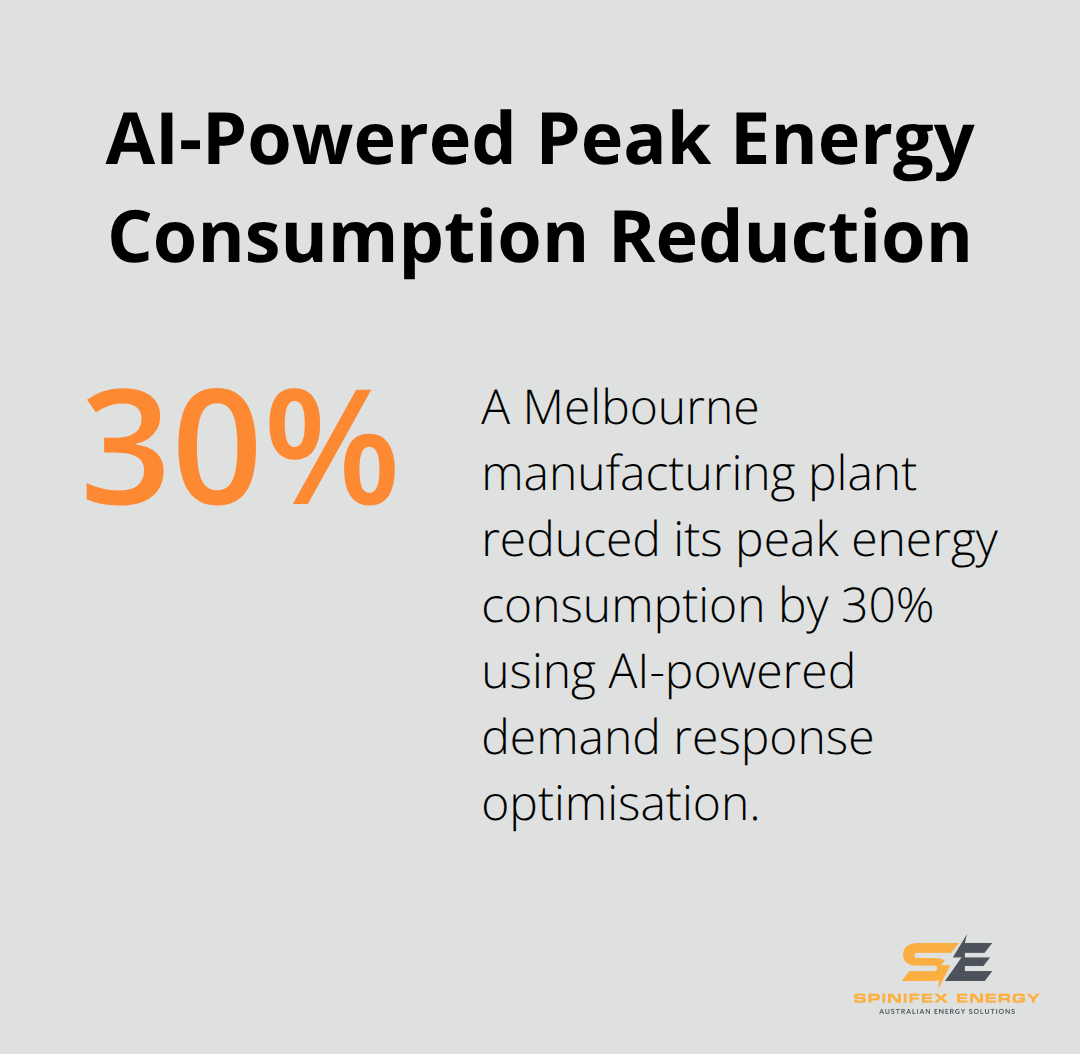
A manufacturing plant in Melbourne used AI-powered demand response optimisation to cut its peak energy consumption by 30%. The system shifted non-critical processes to off-peak hours and briefly reduced power to non-essential equipment during demand events (all without impacting production targets).
Energy Storage Management
For businesses with on-site energy storage systems, AI proves a game-changer. These intelligent systems predict the best times to charge and discharge batteries based on energy prices, demand patterns, and even weather forecasts for solar-powered systems.
A recent review investigates the role of artificial intelligence in predicting the state of charge for thermal energy storage devices.
AI Integration Challenges
While AI solutions offer significant benefits, businesses face challenges in their implementation. These include:
- Data quality and availability
- Integration with existing systems
- Staff training and adaptation
- Initial investment costs
Overcoming these challenges requires careful planning and expertise. Companies like Spinifex Energy guide businesses through the process of selecting and integrating the most suitable AI energy management tools for their specific needs.
As businesses continue to adopt AI-powered energy management solutions, the next step involves implementing these technologies effectively within existing energy strategies. The following section will explore how businesses can assess their current energy infrastructure and choose the right AI tools to maximise their energy efficiency efforts.
How to Implement AI in Your Energy Strategy
Assess Your Current Energy Infrastructure
The first step to implement AI in your energy strategy involves a comprehensive audit of your existing energy infrastructure. This process includes:
- Analysis of historical energy consumption data
- Identification of major energy-consuming equipment and processes
- Evaluation of current energy management systems and their capabilities
- Assessment of the quality and accessibility of your energy data
A thorough assessment provides a clear picture of your energy landscape and highlights areas where AI can make the most significant impact. For instance, a manufacturing company might discover that their HVAC system accounts for a significant portion of their energy consumption (making it a prime target for AI-driven optimisation).

Select the Right AI-powered Tools
After you assess your infrastructure, you must choose the right AI tools. Base this decision on your specific needs and goals. Consider factors such as:
- The scale of your operations
- Your budget for energy management
- The complexity of your energy systems
- Your specific energy-saving targets
A large office complex might benefit from an AI-powered building management system that optimises HVAC and lighting based on occupancy patterns. In contrast, a small retail chain might find more value in an AI tool that focuses on demand response and energy procurement optimisation.
You must choose tools that integrate well with your existing systems. Compatibility issues can lead to implementation delays and reduced effectiveness.
Train Staff and Integrate AI into Existing Processes
The final step involves the integration of AI into your daily operations and the training of your staff to use these new tools effectively. This phase often receives less attention but proves essential for success.
Start by identifying key personnel who will work directly with the AI systems. This might include facility managers, energy specialists, and IT staff. Provide comprehensive training on how to use the AI tools, interpret their outputs, and take appropriate actions based on AI-generated insights.
You must also create clear protocols for how you will implement AI-generated recommendations. For instance, will the AI system have the authority to make automatic adjustments, or will human approval be required for significant changes?
One large hotel chain successfully integrated an AI energy management system by creating a dedicated team responsible for monitoring and acting on AI insights.
Monitor and Adjust
The implementation of AI in your energy strategy requires ongoing attention. Regular reviews and adjustments ensure the AI system continues to meet your evolving energy management needs. Try to:
- Set up regular performance reviews of your AI system
- Continuously update your AI models with new data
- Stay informed about new AI technologies in energy management
This proactive approach allows you to maximise the benefits of AI in your energy strategy and adapt to changing energy landscapes.
Wrapping Up
AI energy management revolutionises business energy consumption, offering unprecedented opportunities for cost reduction and sustainability. Through predictive analytics, automated optimisation, and real-time monitoring, AI empowers businesses to make data-driven decisions and take proactive measures in managing their energy resources. The impact of AI on energy management extends beyond mere efficiency gains, transforming how businesses approach energy procurement, utilise renewable sources, and respond to dynamic market conditions.
AI-powered systems enable smarter grid management, facilitate the integration of distributed energy resources, and pave the way for more resilient and flexible energy infrastructures. We anticipate AI to play an even more significant role in energy management, with advancements in machine learning algorithms leading to more accurate predictions and optimisations. The integration of AI with emerging technologies like blockchain and the Internet of Things will create new possibilities for energy tracking and trading.
At Spinifex Energy, we specialise in guiding businesses through this transformative process of implementing AI energy solutions. Our tailored energy consulting services help busy professionals and business managers optimise their electricity expenses through proactive energy procurement and innovative solutions (including AI-powered tools). The revolution in AI energy management offers businesses the tools to significantly reduce costs, improve operational efficiency, and contribute to a more sustainable future.