
Energy costs continue rising while grid demands become more unpredictable. Smart businesses are turning to flexible loads to cut expenses and generate new revenue streams.
At Spinifex Energy, we’ve seen companies reduce peak demand charges by 30-40% through strategic load management. This approach transforms energy consumption from a fixed cost into a controllable asset that works with grid operators to maintain stability.
What Makes Energy Loads Flexible
Flexible loads represent energy-consuming equipment that can adjust power usage timing and intensity based on external signals. This technology shifts electricity consumption away from expensive peak hours while maintaining operational requirements. Manufacturing plants, office buildings, and data centres achieve this flexibility through smart controls that respond to price signals or grid operator commands.
Equipment That Powers Flexible Load Programs
Industrial refrigeration systems provide excellent flexible load opportunities since they can pre-cool during low-cost periods and reduce consumption during peak hours. HVAC systems in commercial buildings can shift heating and cooling schedules by 2-4 hours without affecting occupant comfort. Electric vehicle charging stations, battery storage systems, and water heating equipment also offer significant flexibility. The U.S. Department of Energy reports that these strategies can reduce utility bills by up to 30% while generating additional revenue through demand response participation.
How Grid Operators Use Your Flexible Loads
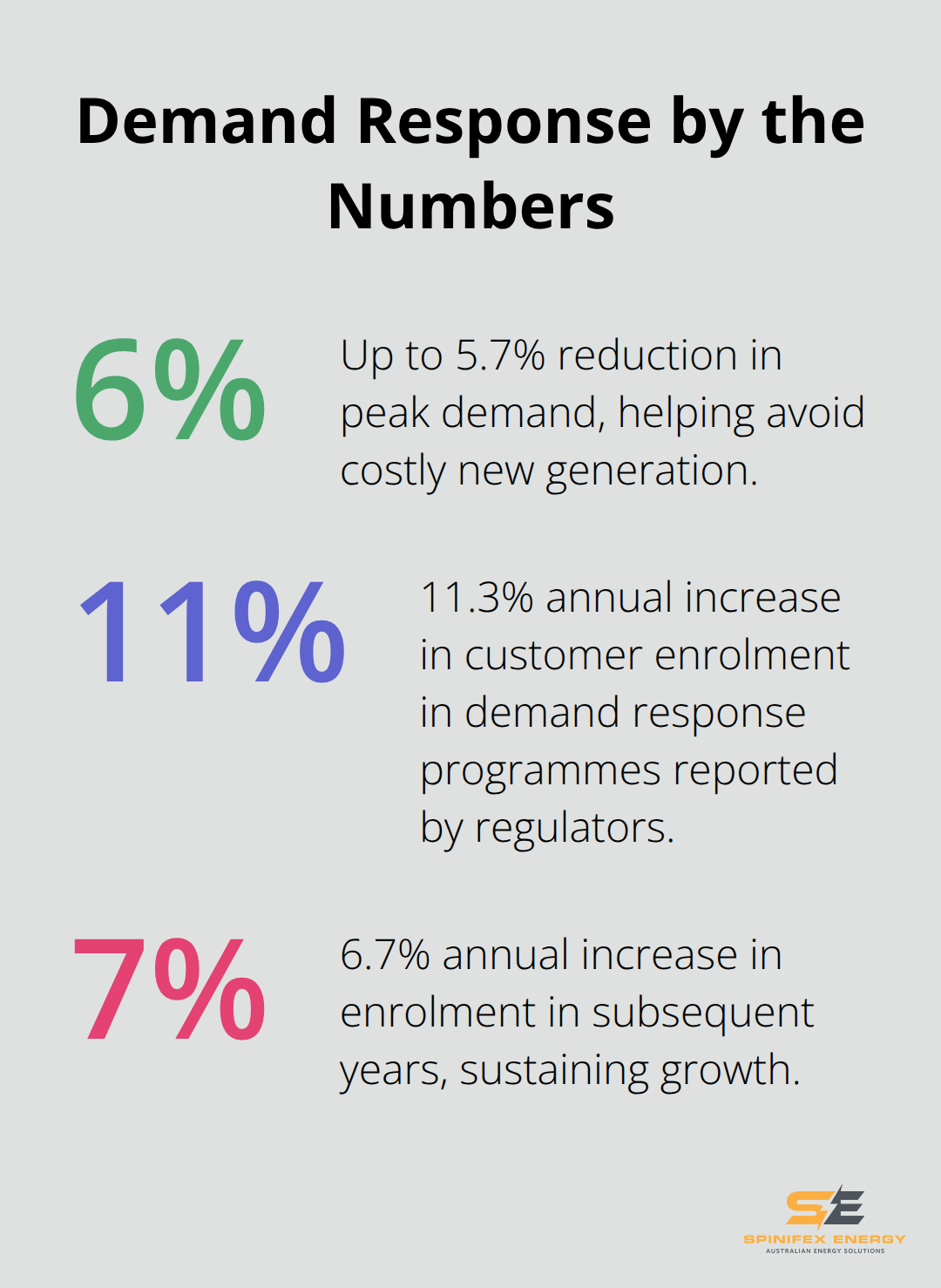
Grid operators pay businesses to reduce consumption during stress events when electricity demand exceeds available supply. The Rocky Mountain Institute reports that demand response programs can reduce peak demand by up to 5.7%, preventing costly power plant construction. Participating facilities receive advance notice of curtailment events (typically 2-24 hours), allowing time to adjust operations. Smart energy management systems automatically respond to these signals and optimise energy use patterns while maintaining productivity. This coordination prevents blackouts and reduces wholesale electricity prices for all consumers.
Smart Controls That Enable Load Flexibility
Modern energy management systems monitor real-time electricity prices and grid conditions to automatically adjust equipment operation.
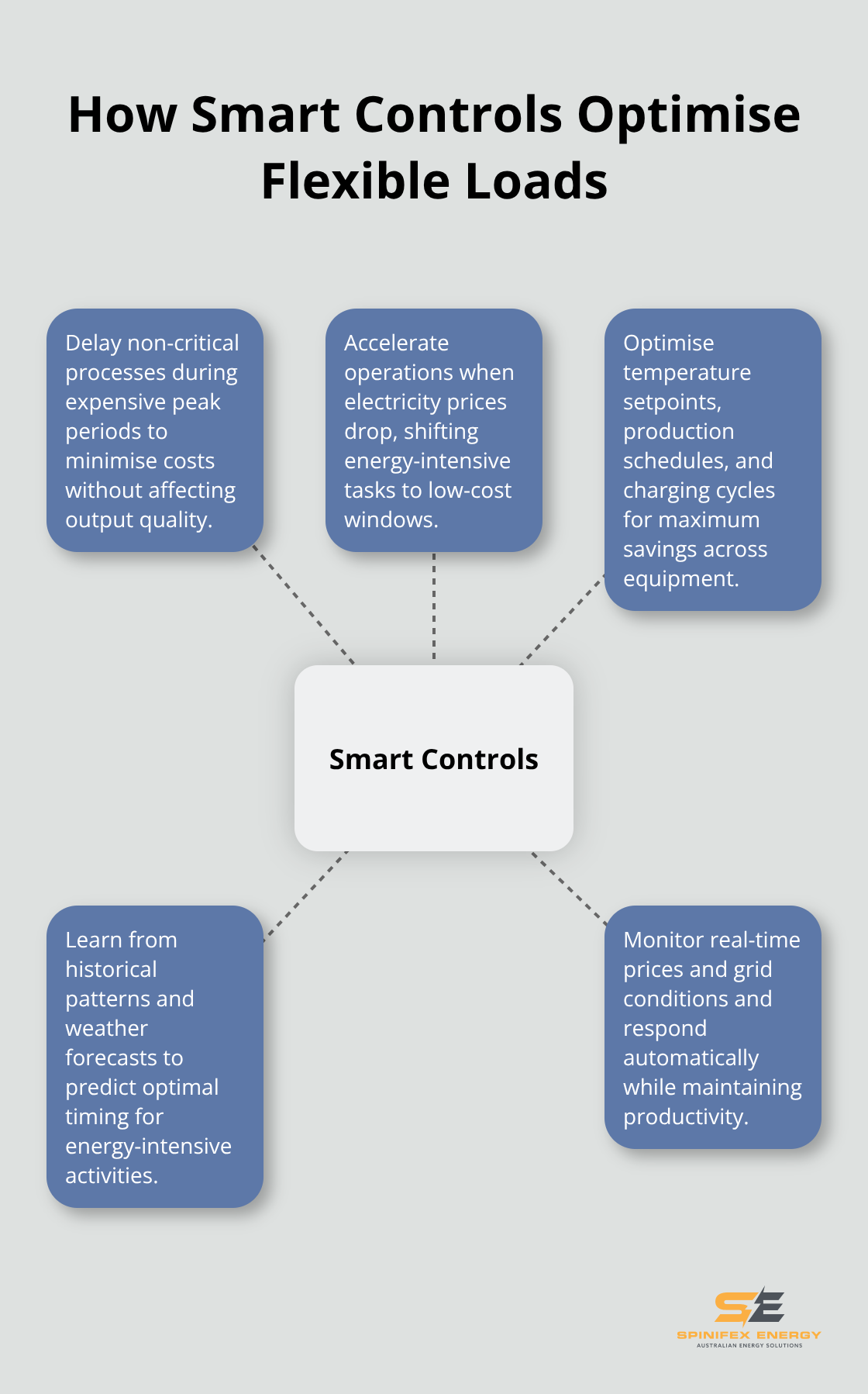
These systems can delay non-critical processes during expensive peak periods and accelerate operations when electricity costs drop. Temperature setpoints, production schedules, and charging cycles all become variables that smart controls optimise for maximum savings. The technology learns from historical patterns and weather forecasts to predict optimal timing for energy-intensive activities, creating a responsive energy strategy that adapts to changing market conditions.
How Much Money Can Flexible Loads Save Your Business
Peak demand charges can represent about 10% to 20% of total costs for large energy users, which makes them a significant controllable expense for most businesses. The U.S. Department of Energy confirms that flexible load strategies reduce utility bills by up to 30%, with some facilities that achieve even higher savings. Manufacturing plants that shift production schedules away from peak hours typically save $50,000-200,000 annually per facility. Commercial buildings reduce HVAC costs by 15-25% through strategic temperature adjustments during expensive peak periods. These savings compound monthly since demand charges are based on your highest 15-minute usage window during peak hours.
Revenue Generation Through Grid Services
Grid operators pay businesses between $50-500 per megawatt hour for participation in demand response programs during grid stress events. The Federal Energy Regulatory Commission reports that demand response programs show annual percentage increases of 11.3% and 6.7% in customer enrolment. Industrial facilities with 5-10 MW of flexible load capacity earn $100,000-300,000 annually through these programs while they maintain normal operations. Battery storage systems provide additional revenue through frequency regulation services (earning $200-800 per MW per day). Smart energy management systems automatically bid into these markets and optimise participation without manual intervention from facility managers.
Operational Control Through Smart Energy Management
Advanced energy management systems provide minute-by-minute visibility into equipment performance and energy consumption patterns. Facilities gain precise control over when equipment operates, which reduces energy waste by 10-20% through optimised schedules. Real-time monitoring identifies inefficient equipment before it impacts operations and prevents costly breakdowns and unplanned maintenance. Temperature controls, lighting systems, and production equipment respond automatically to price signals while they maintain quality standards (transforming energy from an unmanaged expense into a strategic asset).
These financial benefits create the foundation for successful flexible load implementation, but real-world applications demonstrate how different industries maximise these opportunities through specific equipment and operational strategies.
How Real Companies Maximise Flexible Load Profits
Manufacturing facilities achieve the highest returns from load shifts because their energy-intensive operations offer multiple optimisation opportunities. Alcoa aluminium smelters participate in energy market studies and grid optimisation projects that can involve investments of up to $20 million for infrastructure improvements and business case development. Steel manufacturers move electric arc furnace operations to off-peak hours and cut demand charges by 40-50% while they maintain production targets. Food processors pre-cool refrigeration systems during cheap electricity periods and coast through expensive peak hours without temperature violations.
Textile manufacturers adjust dyeing and finishing processes to avoid peak rates (saving $100,000-400,000 annually per facility). These companies install automated control systems that monitor electricity prices every 15 minutes and adjust production schedules without human intervention.
Commercial Buildings Transform HVAC Into Revenue Generators
Office buildings generate substantial savings through strategic HVAC management that pre-conditions spaces during low-cost periods and reduces loads during peak hours. The Empire State Building achieves significant cost reductions through its energy retrofit that includes demand response capabilities, with benefits including lower cooling demand and reduced utility costs. Shopping centres earn $50,000-150,000 yearly through HVAC load curtailment during grid stress events while they maintain customer comfort through thermal mass strategies.
Smart lights provide additional flexibility through automated dimming during peak periods and reduce electricity consumption by 20-30% without they affect productivity. Hotels optimise water heater schedules and adjust room temperatures in unoccupied areas to participate in demand response programs that generate $30,000-80,000 in annual revenue.
Data Centres Lead Battery Storage Innovation
Microsoft data centres use battery backup systems for both reliability and grid services and earn millions annually through frequency regulation markets while they maintain 99.9% uptime. Google operates over 500 MW of demand response capacity across its facilities and generates substantial revenue through load curtailment during peak periods. Cryptocurrency operations adjust processing intensity based on real-time electricity prices and maximise profitability through automated load management systems.
Cloud service providers install massive battery systems that provide grid stability services during normal operations and emergency backup power during outages (creating dual revenue streams from the same infrastructure investment). These facilities demonstrate how strategic energy management transforms operational costs into profit centres.
Final Thoughts
Flexible loads transform energy consumption from a fixed expense into a strategic revenue generator. Companies that implement these strategies reduce peak demand charges by 30-40% while they earn additional income through grid services. Manufacturing facilities save $50,000-200,000 annually, while commercial buildings generate $30,000-150,000 through demand response participation.
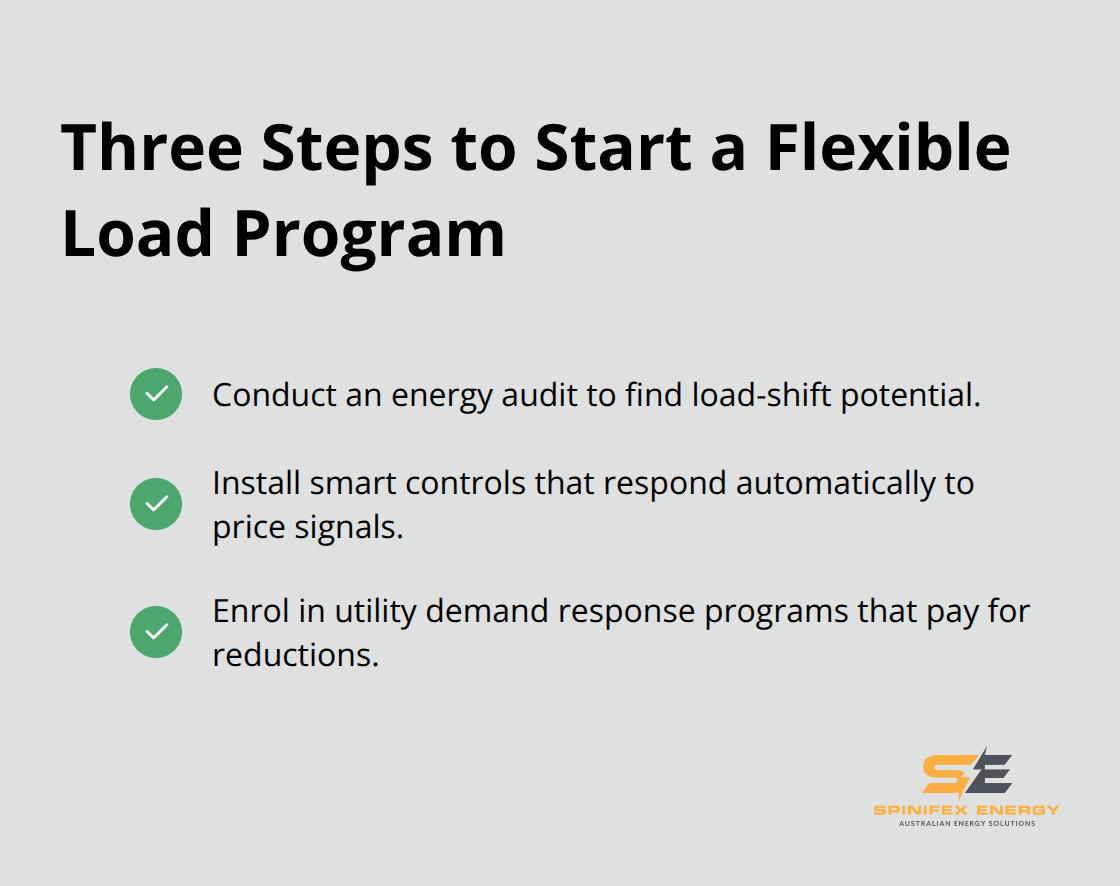
Smart businesses start their flexible load programs with three essential steps. They conduct energy audits to identify equipment with load shift potential, install smart controls that respond automatically to price signals, and enrol in utility demand response programs that pay for consumption reductions during peak periods.
The market for demand response technologies shows compound annual growth rates that exceed 20% through 2030 (as grid operators increasingly rely on flexible loads to integrate renewable energy sources).
We at Spinifex Energy help businesses implement comprehensive energy strategies that maximise savings through proactive procurement, commercial solar systems, and battery storage solutions. Our approach focuses on data-driven methods that optimise electricity expenses while they promote sustainability. Smart energy management creates competitive advantages that extend far beyond simple cost reduction.